
Returning Home
on ceremony, the bright pearl, and what was never divided

Returning Home
A note to my sangat — on ceremony, the bright pearl, and what was never divided
A quick note before we begin: I’m returning to my regular teaching schedule. This Tuesday at 7 PM Central, the wonderful Taj Chander will be leading class — on a solar eclipse, during Mardi Gras. My classes resume Saturday and Sunday at 9 AM Central. Sunday classes are always open to the public, and donations are gratefully welcomed. You can sign up at www.yubigukundalini.yoga.
I want to begin this week with gratitude.
Thank you for your patience while I stepped away to attend an Indigenous ceremony in Texas. I’m writing this from San Antonio, staying with one of the first relatives I ever made around traditional Indigenous practices — someone who has been family to me for over two decades. Some of you know that my family is Acadian, Creole, and Native — Louisiana Creole of Atakapa-Ishak descent — and that ceremony has been part of my life since my twenties. There were relatives I hadn’t seen in quite some time, people I care about deeply, people with whom I’ve sat in ceremony for years and from whom I continue to learn about the spiritual traditions of the Americas. Texas isn’t far. Fourteen hours of driving. And it was worth every mile.
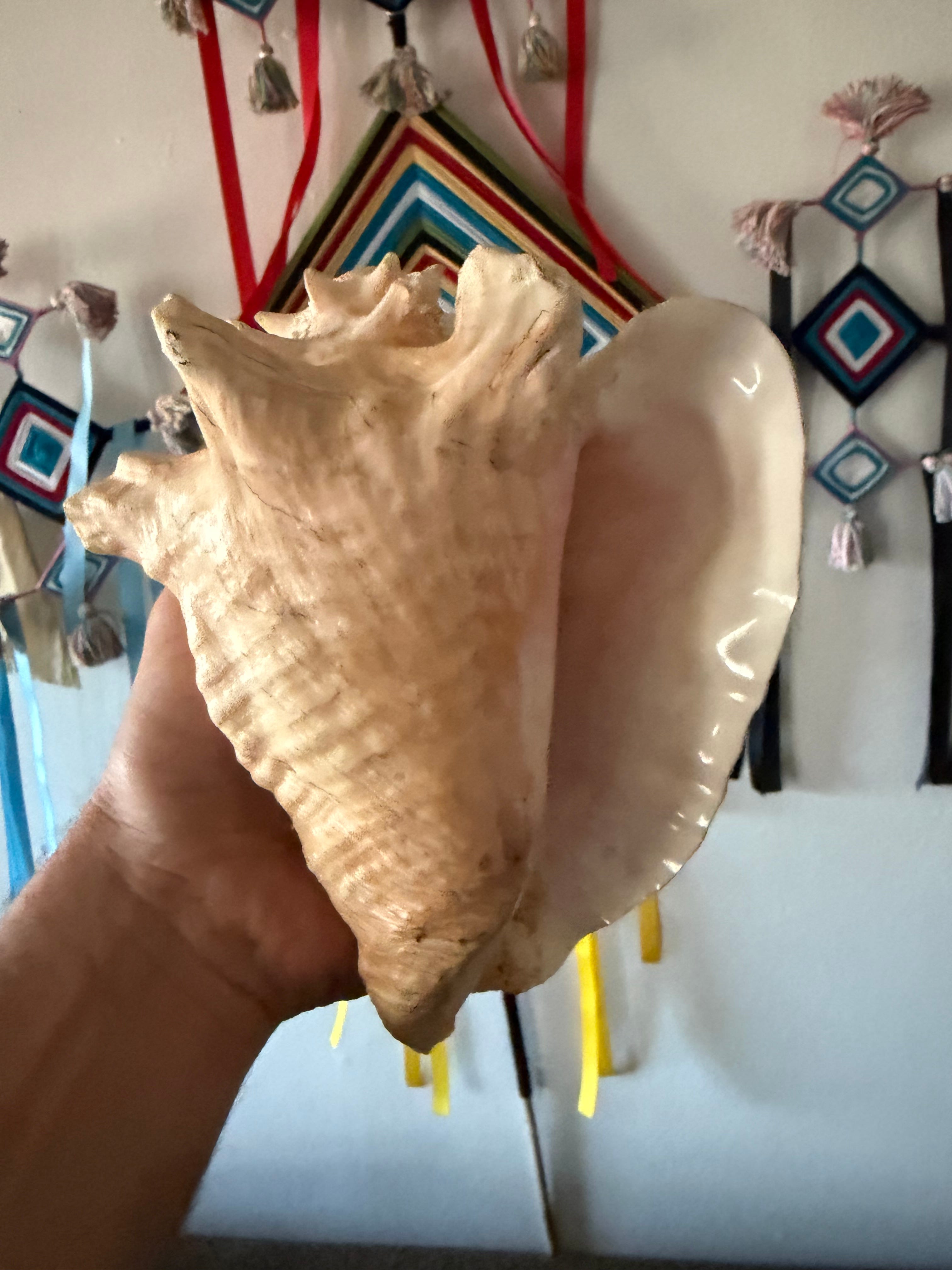
This trip came at a particular moment of transition. After six years of intensive study — folding my MFA into a PhD program, completing coursework, passing oral exams, conducting what feels like a lifetime of research — I’ve entered the dissertation phase. The intensity has shifted. The pace is different. I’m no longer preparing for exams or racing through seminars. There is more spaciousness now, and within that spaciousness, I could finally make the drive.
The Bright Pearl in All Directions
There is a koan attributed to the ninth-century Chan master Xuansha Shibei that I’ve been sitting with for some time. He said: The entire world of the ten directions is one bright pearl.
When a monk asked him how to understand this, Xuansha replied: what is the purpose of understanding it? And when the monk later parroted the phrase back to him as if he’d grasped it, Xuansha told him he was living in the cave of demons on the black mountain.
I love this teaching because it points to something that can’t be arrived at through understanding alone. The bright pearl is not a concept to be grasped. It is the condition you are already inside of — and the moment you fix it into a position, the moment you make it a thing you possess or perform, you’ve lost it. Not because it’s gone. It can never be gone. But because you’ve replaced the luminous wholeness with a representation of it.
Driving alone through the Texas countryside on my way to ceremony, I found myself living inside the bright pearl. Not as a thought, but as a condition. There was no inner dialogue narrating the experience. There was no observer standing apart from the observed. The clouds moving across the sky, the birds, the road stretching out to the horizon, the occasional thought drifting through — all of it was one motion, one flow. Not a blank emptiness but a fullness. Eyes open. Completely present. The awareness that watches and the world that is watched, not two things but one bright pearl, luminous in all directions.
This is what Yogi Amandeep Singh calls the practice of finding freedom from our habitual conditions — from the chaos mind, from the projected false self that dwells in what has already passed or what has not yet arrived. He describes this as a path that combines method and wisdom: the discipline that gives us structure, and the lived realization that the discipline serves. When these two come into alignment, we are not escaping our experience. We are arriving in it — fully present, fully here. The method clears the way. The wisdom is what walks through.
I’ve been studying and teaching from this orientation for some time now, and what I notice is that it was always present in the Kundalini yoga teachings, but often hidden in plain sight. Yogi Bhajan was almost certainly teaching from a non-dual perspective, but the full clarity of what that means has been illuminated for me through Amandeep’s work — his insistence that Kundalini yoga emerges from a living, indigenous tradition of the Indian subcontinent and the Himalayas, a tradition of direct realization, not merely doctrinal adherence.
Lightning and the Traiteur’s Hands
I want to share something personal that I don’t often discuss publicly, because it has bearing on how I arrived here — at the intersection of ceremony, yoga, and the healing arts.
When I was very young, my aunt passed on to me the traiteur tradition, an ancient Acadian lineage of energy healing that has existed in Louisiana since the French settled there in the eighteenth century. The traiteur tradition combines prayer, laying on of hands, and an intuitive understanding of the body’s energy. It is traditionally passed down through generations, often to the opposite gender, and it is understood as a gift — something you receive, not something you claim.
Not long after that tradition was transmitted to me, I was struck by lightning. I was struck by lightning again in my thirties. And here is the detail that has never left me: both my aunt who passed the tradition to me and her mother — my great-grandmother — were also struck by lightning. Twice each. None of us were killed by it. But I have never believed this was coincidental. I believe it was related to the tradition itself, to something in the energetic lineage that attracts or conducts that kind of force.
Over many years of sitting in Indigenous ceremonies across this continent, I also learned healing ways that I understand as deeply related to the traiteur lineage — not identical, but part of the same current. And now, through Kundalini yoga, I find myself carrying yet another stream of healing practice that flows from the same source. These are not separate rivers. They are braids of the same water.
What Ceremony Reminded Me
The ceremony itself reminded me of something I needed to remember.
When I was younger, I attended these gatherings with a kind of rigidity that I mistook for devotion. I was meticulous about the rules, the protocols, the teachings. And where my ego was strongest — though I couldn’t see it then — was in the feeling that I was living up to those rules. That I was on point. That I was doing it right.
Now, approaching my late forties, I can see that this was one of the deepest layers of my identification with personhood. The self that needed to perform discipline correctly was still a self organizing itself around its own image. It was still living in the cave of demons on the black mountain — grasping the bright pearl as a concept rather than dissolving into its light.
What I found in ceremony this time was something different: total contentment. Ease. Non-judgment. Joy. Not because the ceremony was less rigorous, but because I had loosened enough to let it move through me rather than bracing against it with the armor of correctness.
It is good to learn the rules. It is good to understand the nature of what the rules are pointing to. But the rules are pointers to union. When discipline calcifies into identity — when knowing the right way becomes another form of rigidity — that is not balance. The method must serve the wisdom. And the wisdom breathes ease back into the method. Discipline and ease are not opposites. They are partners. They are another union. In the same way, must one not also spend time clutching the pearl on the black mountain in a cave of demons in order to flow? Must the jazz pianist not practice arpeggios in all of the inversions and transformations of a harmonic progression before they can intuitively be in a state of genius spontaneity? Sit with that for a spell, ennit?
Gian, or: The Double-Edged Sword
Here is something I’ve been sitting with. When I say that Gian is a yogi or a poet or a Ph.D. candidate, what am I actually doing? Am I creating another identity? Am I building another fixed position — another name to attach rules to, another persona to get right? Or am I doing the actual work of yoga, which is to create unions between apparent opposites?
This question matters, because it scales.
Look at the divisions taking place in the world right now. Look at the divisions happening within Indigenous communities — between those who are federally recognized and those who are not, between Indigenous peoples who happen to speak Spanish and those who do not, between people who belong to one side of a tradition and people who belong to another. Look at the divisions within yoga communities — this teacher took this position, that lineage took that position, and suddenly the landscape is fractured along lines of rigid identification.
When that kind of divisiveness is happening, you have to look at something: on some level, it means that an identification has become so rigid that it creates a powerful sense of Other. And a powerful sense of Other is not union. It is the opposite of yoga.
This does not mean that relative distinctions are unreal. It does not mean that the pain of genocide or ethnic cleansing or ongoing systemic injustice is something to be transcended or spiritually bypassed. My Acadian ancestors were French people who went to Nova Scotia and mixed broadly with the Indigenous peoples in Canada before being subjected to ethnic cleansing. By the time they reached Louisiana, they had intermarried further with Creole and Native communities. My family line carries two genocides and an ethnic cleansing within recent memory. I have no anger about it — I’ve largely arrived at a place where my deepest conviction is that we must live in harmony with one another today — but that conviction does not require ignorance. We can hold both. We can be acutely aware of the conditions that emerged from historical violence and are ongoing, and still work toward a present built on relationship rather than retribution.
And the same is true within any lineage. We can understand the effects of colonization on India and on the yogic traditions as they traveled to the West — how they were shaped, distorted, commodified, and also preserved and transmitted with great care. We can see, in all sorts of spiritual traditions and practices, that there is a double-edged sword between riding the wind horse and being totally deluded — and the distinction between the two is extremely fine. This is why discernment matters. We can honor and learn and discern all at once. There is no lack of love in discriminating the vast purity from the perverse relative. In fact, that discrimination — made with clarity and without hatred — may be one of the most loving things a practitioner can do.
Here is what the bright pearl teaches: there is not a duality between knowing the relative and knowing the absolute. There is not a duality between being aware of injustice and being at peace. There is not a duality between the discipline of learning the rules and the ease of letting them dissolve into flow. These apparent opposites are already one bright pearl — luminous, whole, containing everything.
The polarities can melt into a flow. The rules and disciplines can flow into ease. Not because the rules become flexible, but because you realize that the rules were always pointers to union. They were always fingers pointing at the moon.
The Work Behind the Work
I want to take a moment to explain what my dissertation research actually involves, because it bears directly on everything I’ve been describing.
My doctoral work is titled Numalia: Visionary Poetics as Relational Ceremony. It examines visionary poetry and spiritual texts as technologies of consciousness — as living instruments through which human beings encounter, transmit, and preserve direct experiences of reality. I’m conducting original interviews and close readings of contemporary poets who report contact with nonhuman intelligences — experiences that Western academia has historically dismissed or pathologized — and I’m developing a methodology for reading the phenomenological traces of those encounters in the poetry itself. In practical terms, I’m asking: what happens when we take visionary experience seriously as a mode of knowledge? What can we learn from poets who describe encounters with realities beyond the ordinary? And how do we read the poems that emerge from those encounters without reducing them to metaphor or symptom?
Here is why this matters for our community: the spiritual traditions we practice — including Kundalini yoga — did not emerge from abstract doctrines. They emerged from poetic and visionary encounters. The Siri Guru Granth Sahib is poetry. The Vedas are poetry. The teachings that form the backbone of our practice were first expressed through the language of direct experiential realization — revelation, vision, song — before they were ever codified into systems or protocols. Yogic teachings are not instructions handed down from a bureaucracy. They are transmissions from human beings who touched something real and found language — poetic language — to carry that experience forward.
This means that when I study visionary poets in my academic work, I am also studying the very process by which yogic traditions come into being. The poet who encounters a numinous intelligence and writes from that encounter is doing something structurally identical to what the rishis did, to what Guru Nanak did, to what the great Himalayan yogis did. The medium is the same. The encounter is the same. The poetry is the technology through which the realization becomes transmissible.
What I appreciate so deeply about Yogi Amandeep Singh’s work is that he is revealing this with great clarity. He is uncovering the indigenous roots of Kundalini yoga — indigenous to the Indian subcontinent, to the Himalayas, to the great contemplative traditions from which both he and Yogi Bhajan drew with intuitive ease. In doing so, he has encouraged me to recognize the same thing about my own indigeneity here in the Americas: that these are living traditions, not artifacts. That the roots are still feeding the tree. That the poetry and the practice are inseparable.
My academic work and my work as a Kundalini yoga teacher are not separate endeavors. They are another union. The scholarship grounds the practice in rigor and historical context. The practice keeps the scholarship honest, embodied, and alive. Each one is a pointer. Each one is the bright pearl.
The Entire World
And so here is what the ceremony gave me, and what I want to leave with you this week.
The work I’ve done as a meditator and yogi has made me a better Indigenous person — more present, more easeful, more able to sit in the fullness of what ceremony asks. And being an Indigenous person, rooted in the ceremonial life of this continent, carrying the traiteur’s gift and the lightning that followed it, has made me a better yogi. The non-dual realization I study and practice was alive in that ceremony. It was beautiful. It was humbling. It was easy and full of joy.
You can be a yogi and a Chicana woman. A yogi and a banker. A yogi and a person of African descent, a Korean-American, a school teacher, a falconer, a musician, a dog walker. There is no duality between any of these aspects of who you are. There is not a duality between the relative existence — the particular body you inhabit, the ancestry you carry, the work you do in the world — and the direct experience of absolute awareness. These things are not opposed. They are already in a non-dual state with one another. They are already the bright pearl.
To be a yogi is to create unions between apparent opposites — not to resolve them into sameness, but to recognize that they were never truly separate. The greatest teachers, and the greatest students — who are usually also teachers — understand that teachings, words, ideas, and rules are only pointers. They exist so that the part of you which has a body and a mind can come into flow with the part of you that is absolute awareness.
This is what it means to find freedom from the chaos of our habitual conditions — to align ourselves to the present moment instead of dwelling in the projected false self. Not to escape the world, but to arrive in it. Not to abandon discipline, but to let discipline and ease become one breath. Not to fix ourselves into a position — not to live in the cave of demons on the black mountain, clutching our bright pearl as if it were a trophy — but to recognize that the entire world, in all directions, has always been this luminous wholeness.
The pearl was never lost. It was never somewhere else. The ten directions are here.
Thank you for walking this path alongside me.
Classes resume Saturday and Sunday at 9 AM Central. Sunday classes are open to the public, and donations are always welcome. You can sign up at www.yubigukundalini.yoga.
Sat Nam.